
Laptop battery performance slowly decreases over time. If your laptop doesn’t last as long as it used to or shuts down unexpectedly, checking battery health is the smartest first step.
The good news is that Windows already provides built-in tools to check battery health accurately, no third-party software required. Whether you’re using Windows 10 or Windows 11, the methods below work perfectly.
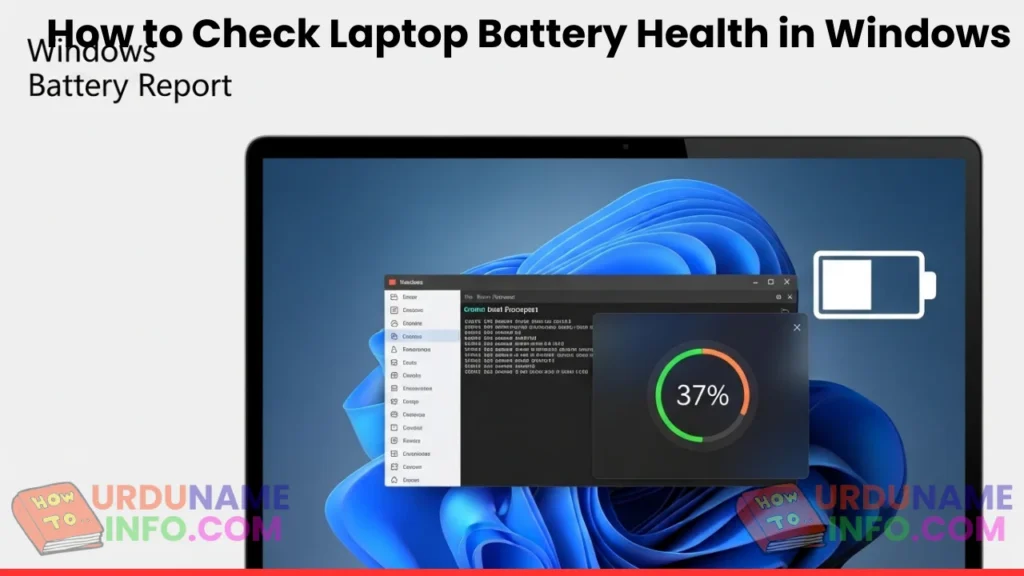
Use Windows Battery Report (Most Accurate Method)
Windows includes a hidden but powerful battery report feature. It shows your battery’s original capacity, current capacity, usage history, and overall health.
You simply generate a report once, and Windows creates a detailed file you can open in your browser. This method is safe, official, and recommended.
After checking the report, you’ll clearly understand whether your battery is healthy, aging, or needs replacement.
Check Battery Health Using Settings (Quick Overview)
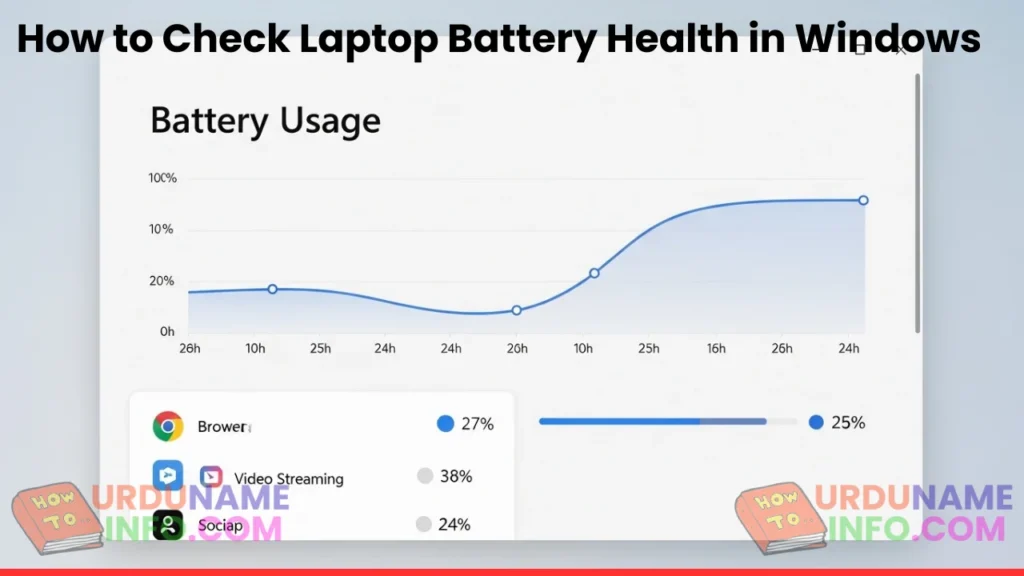
Windows Settings gives you a basic overview of battery usage. While it doesn’t show exact health percentages, it helps identify abnormal battery drain.
You can see which apps consume more power and adjust usage habits to extend battery life.
This method is useful for daily monitoring but should be combined with the battery report for accuracy.
Read More: How to Speed Up an Old Laptop Without Upgrading Hardware
Compare Design Capacity vs Full Charge Capacity
Inside the battery report, two important values matter most:
Design Capacity and Full Charge Capacity.
If the full charge capacity is much lower than the design capacity, it means your battery has aged. A small drop is normal, but a big difference indicates battery wear.
This comparison helps you decide whether you should continue using the battery or consider replacement.
Check Battery Cycle Count
Battery cycle count tells you how many times your battery has gone through a full charge cycle. Laptop batteries are designed for a limited number of cycles.
Higher cycle count = older battery.
Lower cycle count = better battery condition.
This data is especially useful if you’re buying or selling a used laptop.
Signs of Poor Battery Health
Even without tools, some signs clearly indicate battery health issues. These include fast draining, overheating, random shutdowns, or battery percentage jumping suddenly.
If you experience multiple symptoms together, it’s likely the battery has degraded.
How Often Should You Check Battery Health?
You don’t need to check battery health daily. Once every few months is enough for normal users. If your laptop is old or used heavily, checking more often helps prevent sudden battery failure.
Regular checks help you plan battery replacement before it becomes a serious problem.
Conclusion
Checking laptop battery health in Windows is simple, free, and extremely helpful. Using Windows’ built-in battery report gives you accurate data without installing risky software. If your battery health is good, you can improve usage habits. If it’s poor, you can replace the battery at the right time instead of guessing. I have told you guys step by step how you can check your laptop battery with help.

My name is Mujahid Shah. I provide helpful information about mobile phones, laptops, and general technology topics. I write simple and easy guides to help people solve common problems and understand tech in a better way.